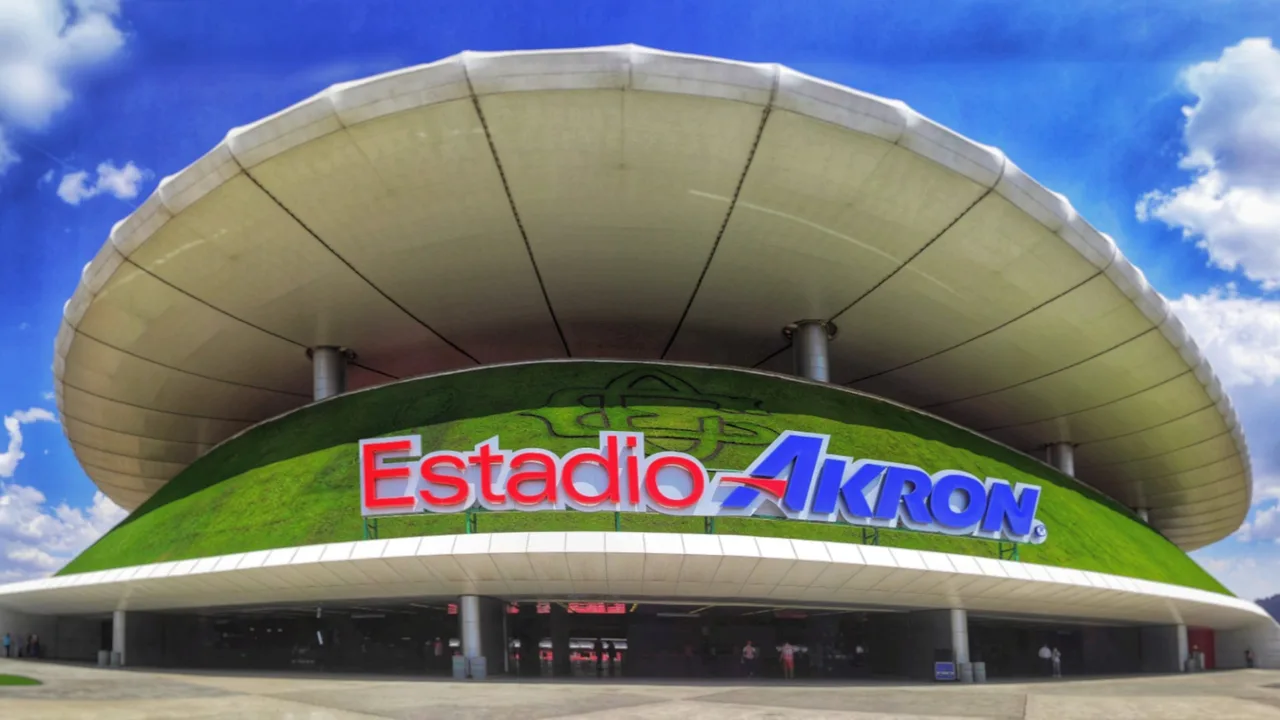
The day Guadalajara turned green
June 18, 2026 will go down in Jalisco's history. For the first time in decades, the Mexican national team played a World Cup match on Tapatío soil, and Estadio Akron answered with 45,522 souls dressed in green who turned Zapopan into the loudest stadium on the planet for 90 minutes.
Mexico beat South Korea 1-0 thanks to a goal from Luis Romo in the 50th minute, became the first team to qualify for the round of 32 at the 2026 World Cup, and closed the night as Group A leader. But beyond the scoreline, what Guadalajara experienced that evening was something this city hadn't seen in a very long time.
This is the full story — before, during and after the match.
---
Before the match: the whole city as a prelude
Zapopan was already green by morning
The area around Estadio Akron started filling up at 10 in the morning. Families in national team jerseys, groups of friends with flags, improvised carnitas and michelada stands on every corner of Boulevard Bosques de Santa Anita. The atmosphere was exactly what Mexican soccer has been promising for decades: massive, festive and completely free at every corner surrounding the stadium.
The Mexico-Korea relationship: a match between rival friends
What made this match special was the historical context. Mexico and South Korea share more than 120 years of migratory and cultural ties — the first wave of Korean immigrants arrived on Mexican soil in 1905. In the days before the match, both fanbases shared tacos, soju and chants at the Fan Fest in the historic downtown, an image that summed up the World Cup spirit at its best.
Mariachi and K-pop shared the same tables. The result on the field was almost beside the point — for a few hours.
How 45,000 people got there
The mobility operation for the match was massive. The main options:
The official recommendation was to arrive at least 2 hours early. Those who followed it caught the full pre-match buildup. Those who didn't found lines over an hour long at the security checkpoints and missed the national anthem.
---
During the match: 90 minutes of pure tension
First half: El Tri struggles against a disciplined Korea
The Mexican national team came out pressing, under pressure to win, with 45,000 spectators pushing from the first minute. But South Korea arrived in Guadalajara with a clear plan: block the space, break quickly on the counter, and weather the green storm.
The first half ended 0-0. The whistles from the crowd were brief — the Tapatío crowd knows its soccer and knew the match was still open. The tension, though, was palpable.
Minute 50: the moment nobody will forget
Five minutes after the break, the goal arrived. Raúl Jiménez started a play through the middle, South Korean goalkeeper Kim Seung-gyu came out to clear, collided with his own teammate Lee Gi-hyeok, and lost the ball. Luis Romo, always in the right spot, tapped it into the empty net.
The stadium exploded. Forty-five thousand people jumped at the same time. On the screens at Akron, on the phones of people watching from home, at the Fan Fest downtown, in the bars of Chapultepec and the plazas of Tlaquepaque: all of Guadalajara screamed that goal.
Minute 87: Raúl Rangel, the quiet hero
With Mexico up 1-0 and nerves on edge, South Korea got its best chance of the match. Cho Gue-sung found himself alone in front of goal, and Raúl Rangel answered with a double save that preserved the lead. The roar from the stadium in that moment was, if anything, even bigger than the one for the goal.
The referee blew the final whistle. Mexico 1-0 South Korea. Group A's first qualifier. The first team to advance to the round of 32 under the new World Cup format.
---
After the match: Guadalajara in the streets
The euphoria lasted until dawn. The area around Akron became an extension of the celebration: horns, honking, chants, flags waving from car windows. Avenida Vallarta, Chapultepec and the historic downtown were awash in green for hours.
The return-trip operations ran smoothly — Ride al Estadio had its peak wait times, but the crowd flow was distributed with relative efficiency. The city was ready for this moment.
And at the Fan Fest in Plaza Liberación, the celebration continued until 11 at night.
---
The lesson from mass events: what nobody plans for until they need it
A World Cup match with 45,000 people in the stadium, plus hundreds of thousands more in fan zones, plazas, bars and surrounding areas, generates extraordinary logistics. Host cities plan for it years in advance: transport, security, signage, first aid.
But there's one detail that always comes up in conversations among organizers, municipalities and mass-event producers: restrooms.
At an event of this scale, insufficient restroom infrastructure creates bottlenecks that ruin the experience even when everything else works perfectly. 20-minute lines for the bathroom, missing units in high-traffic zones, unmaintained spaces during the event — these are problems with no excuse when the technology to solve them already exists.
What a truly massive event needs
For a match or event with 10,000+ people, industry best practices point to:
| Estimated attendance | Recommended units | Ideal type |
|---|---|---|
| 5,000 people | 80–100 units | Basic + VIP in premium zones |
| 15,000 people | 200–250 units | Trailers + basic units, distributed |
| 45,000 people | 600–750 units | Full configuration + continuous maintenance |
Distribution matters as much as quantity: one unit every 200 meters across high-concentration perimeters, with clear signage and staff to direct people.
---
Organizing an event around the World Cup? Here's what you need to know
Guadalajara's 2026 World Cup cycle didn't end with Mexico's match. There are more matches at Akron, the Fan Fest runs until July 19, and satellite events — viewing parties, brand activations, corporate VIP zones, afterparties — keep multiplying week after week.
If you're organizing any of those events, Luvory Luxury Toilets is the partner you need.
What Luvory does for your event
The World Cup happens every four years. The memory of your event lasts forever — make sure it's for the right reasons.
Get a quote from us now. We respond within minutes.
Write to us on WhatsApp at +52 33 3324 4946 or at a.martinez@luvory.com.mx. Luvory Luxury Toilets — luxury toilets for Mexico's biggest events.